

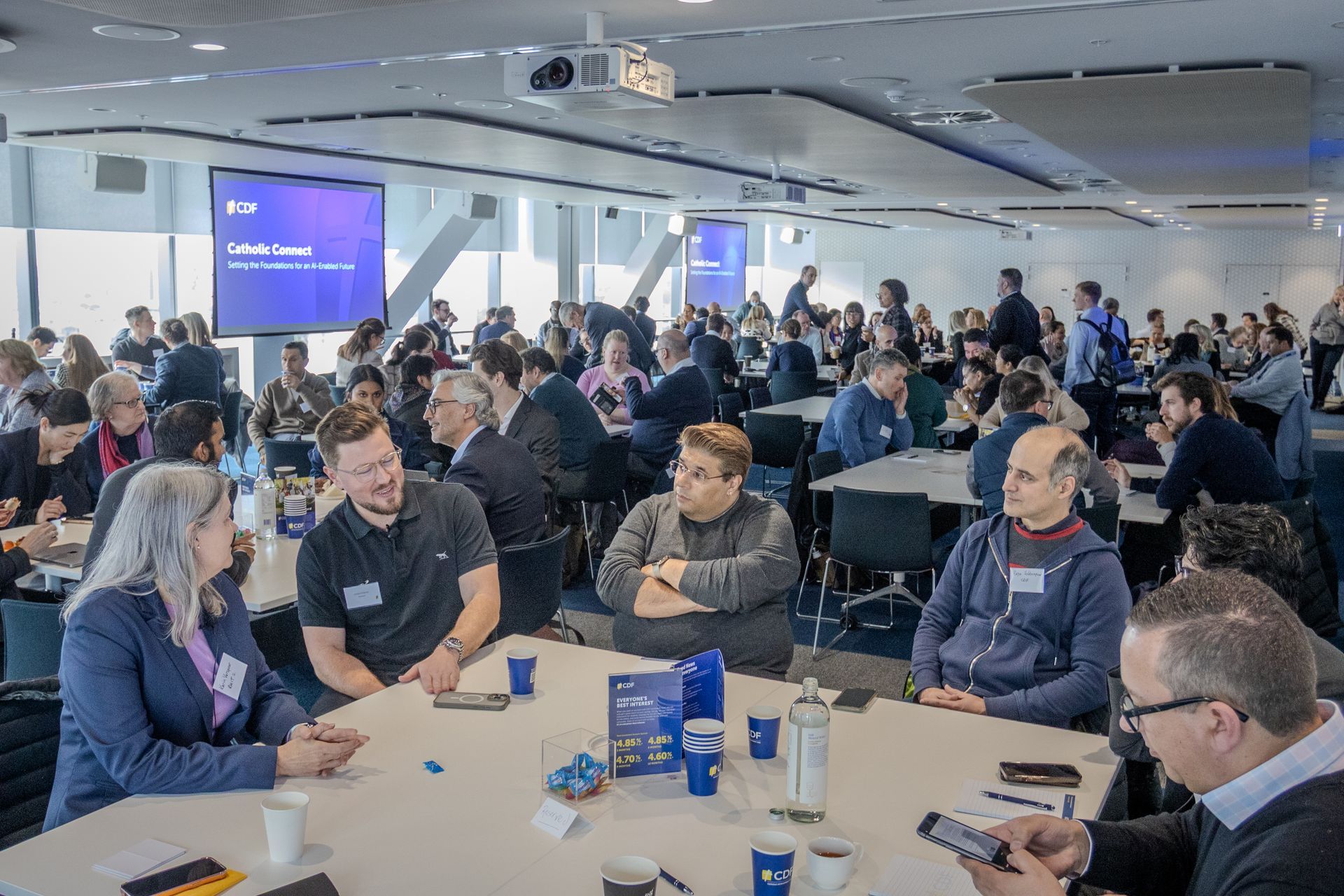
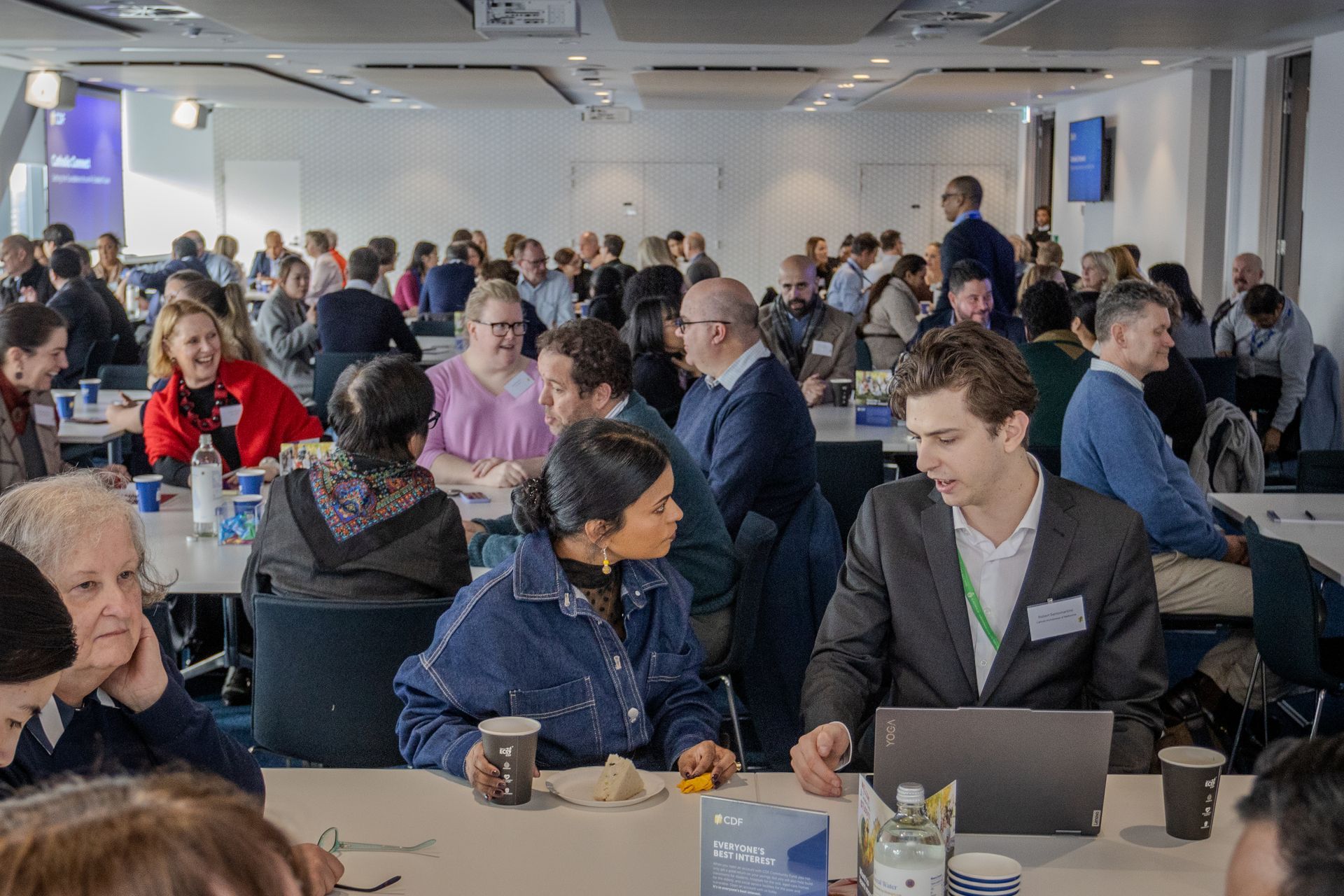
Last week's CDF Catholic Connect workshop brought together over 150 people from Catholic and mission-driven organisations to explore how Artificial Intelligence (AI) can advance their purpose while maintaining human-centered values.
With presentations from three AI experts, the event provided insight and education on the fast-evolving technology and addressed both the transformative potential and critical challenges of AI adoption across a variety of industries.
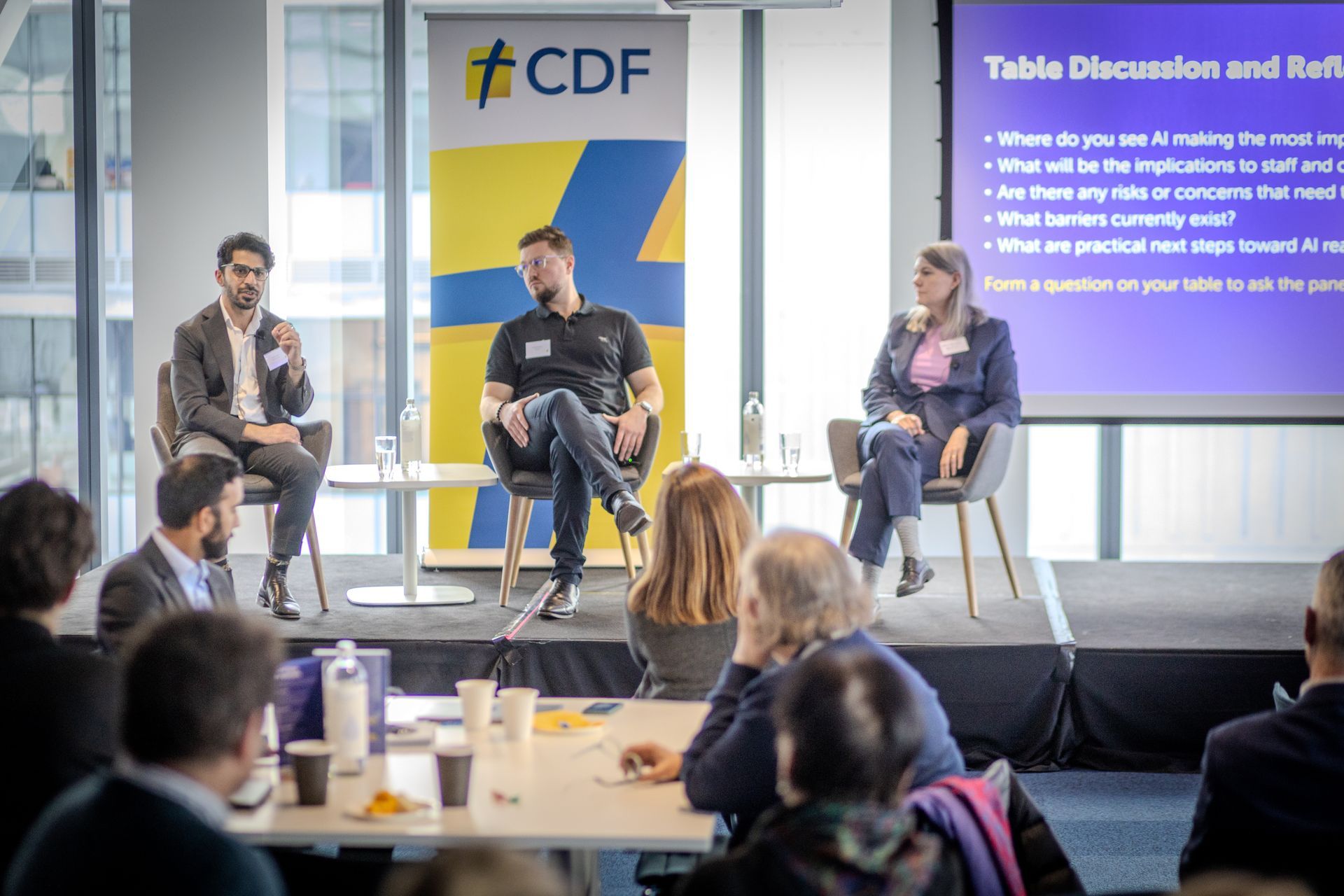
The workshop's AI-expert speakers included:
- Jordan France, Data and AI Technical Specialist at Microsoft, who works closely with Australian nonprofits and healthcare providers to enhance human impact
- Dr Kunal Luthra, a former medical doctor who leads the Australian Health Care practice for global management consulting firm McKinsey & Company
- Professor Karin Verspoor, Dean - School of Computing Technologies at RMIT and the Victorian Node Lead and co-founder of the Australian Alliance for Artificial Intelligence in Health
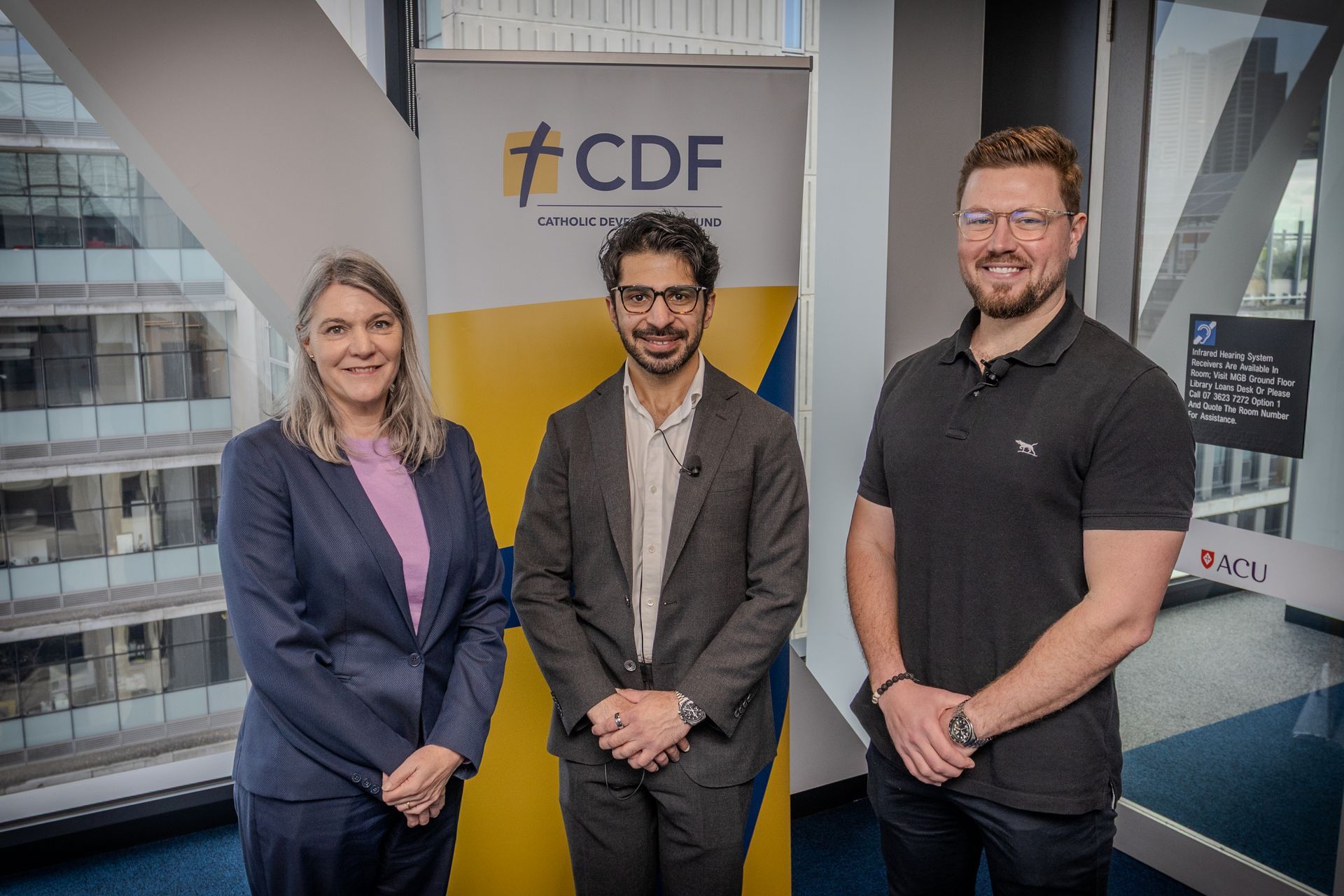
Speakers (from left to right): Prof Karin Verspoor, Dr Kunal Luthra and Jordan France
Strong Interest, Pressing Challenges
The impressive turnout reflected the keen interest in understanding how AI can be harnessed responsibly. This comes in the face of mounting pressures; increased program demands, declining fundraising revenues, staffing challenges, and increasing customer demands. The efficiency gains promised by AI are particularly appealing, however, the speakers all emphasised that AI adoption must be approached with discernment and critical thinking.
Beyond Generative AI: A Broader Toolkit
A key message was that AI encompasses far more than the generative language models dominating headlines. While tools like ChatGPT capture attention, they carry higher risks and uncertainty. Machine learning models, which have been quietly serving healthcare and other sectors for decades, have been seen to provide reliable results for specific tasks, particularly in medical diagnostics where AI has demonstrated remarkable accuracy in analysing medical imagery.
Human-First Approach: Augmentation, Not Replacement
Throughout the presentations, the speakers emphasised that AI should augment human capabilities rather than replace them. As Microsoft's Jordan France shared, AI should help people in purpose-driven organisations spend "less time holding pens and more time holding hands."
This philosophy extends to practical applications across various operational functions:
- Leadership: assisting with strategic planning documents and data-driven insights
- Program delivery: streamlining policy communications and training materials
- Fundraising: enhancing donor conversations and analysing giving patterns
- Operations: Simplifying financial reporting and identifying performance improvements
While appealing, it was reiterated that across these areas the human role remains essential. AI can surface patterns, but it cannot interpret context, understand nuance or account for the data it does not see. Human oversight ensures ethical use, critical evaluation, and alignment with mission and values.
The Governance Imperative
A recurring theme was the critical need for organisation-wide AI governance. With many employees using AI tools without formal approval, there bears questions around risk, particularly regardingdata privacy and security.
Organisations were encouraged to consider AI risk management, including data governance, staff training, and ethical guidelines that maintain human-centered values while leveraging AI capabilities.
Education Insights and Future Challenges
Professor Verspoor's education sector perspective offered valuable lessons, particularly the shift from "detecting cheating" to "detecting learning" – a mindset change that could benefit all organisations integrating AI.
While the event provided valuable insights, significant questions remain around creating organisational cultures willing to embrace AI, ensuring accessibility, and managing negative impacts such as environmental costs and human rights implications.
Moving Forward: Progression Over Perfection
The overarching message was clear: organisations should aim for progression rather than perfection. As Dr Kunal Luthra noted, "no one is really doing it well yet – we're on a steep learning curve as a society" where the importance lies in creating opportunities for thoughtful and safe experimentation and learning.
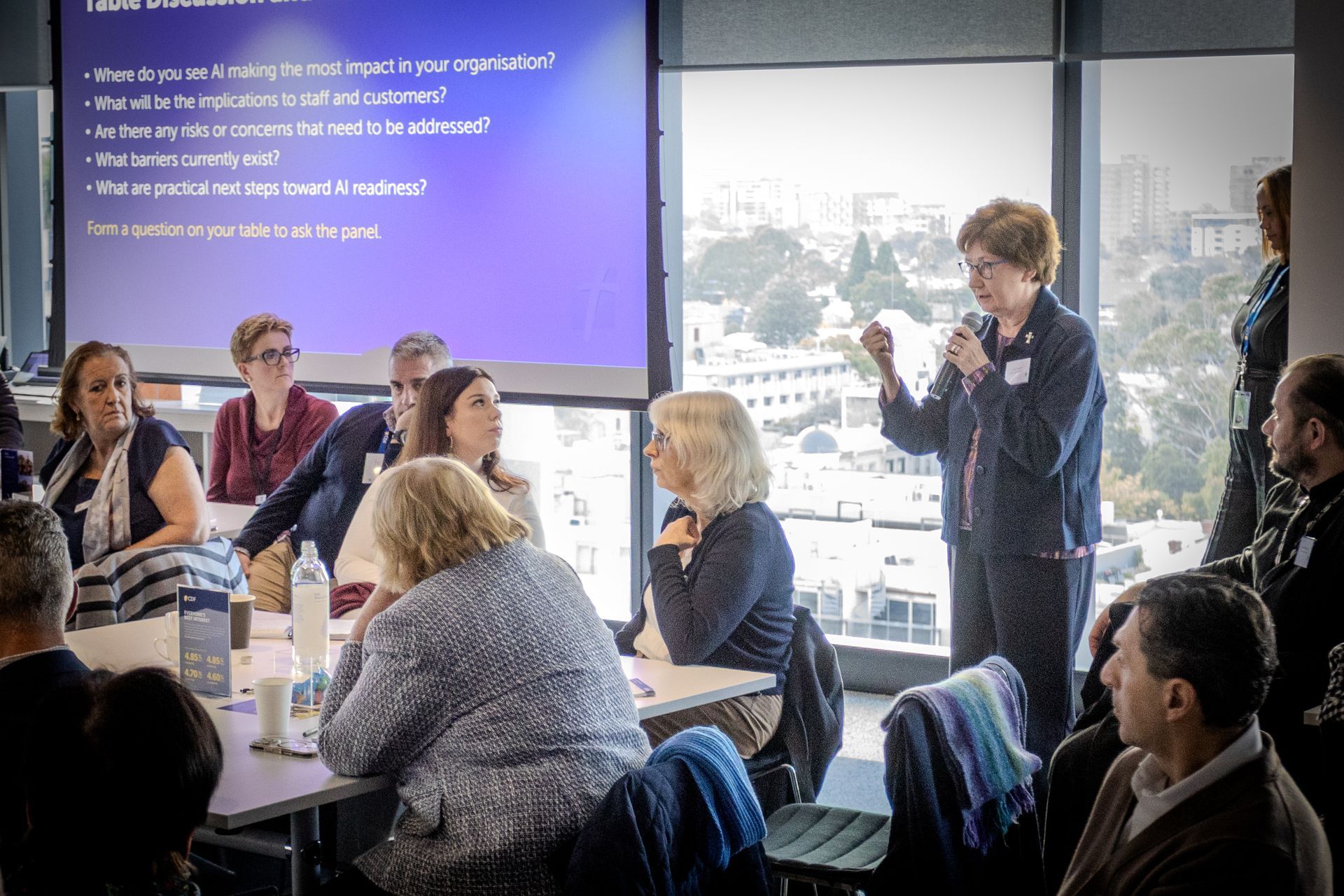
After a robust workshop discussion and question-filled Panel Session, the event emphasised the strong interest in AI and ongoing curiosity across all sectors. It was clear that AI won't solve everything, but when implemented thoughtfully, could ease the administrative burden, enable greater relationship-building and create space for greater service to everyday people and for those across the community who need it most.

Share this article:
Related articles



CDPF Limited, a company established by the Australian Catholic Bishops Conference, has indemnified the Catholic Development Fund ABN 15 274 943 760 (the Fund) against any liability arising out of a claim by investors in the Fund. In practice, this means your investment is backed by the assets of the Catholic Archdiocese of Melbourne. The Fund is required by law to make the following disclosure. Investment in the Fund is only intended to attract investors whose primary purpose for making their investment is to support the charitable purposes of the Fund. Investors’ funds will be used to generate a return to the Fund that will be applied to further the charitable works of the Archdiocese of Melbourne and the Dioceses of Sale and Bunbury. The Fund is not prudentially supervised by the Australian Prudential Regulation Authority nor has it been examined or approved by the Australian Securities and Investments Commission (ASIC). An investor in the Fund will not receive the benefit of the financial claims scheme or the depositor protection provisions in the Banking Act 1959 (Cth). The investments that the Fund offers are not subject to the usual protections for investors under the Corporations Act (Cth) or regulation by ASIC. Investors may be unable to get some or all of their money back when the investor expects or at all and investments in the Fund are not comparable to investments with banks, finance companies or fund managers. The Fund’s identification statement may be viewed here or by contacting the Fund. The Fund does not hold an Australian Financial Services Licence.
